
The “One Surface Rule” Is the Easiest Way to Cut Clutter in a Small Space
Key Takeaways
- The “one surface rule” targets a single countertop or surface, reducing visual clutter without requiring a full-room overhaul.
- There are two main approaches: keep one surface completely clear, or keep all surfaces clear except for a single designated zone where items are allowed.
- The method only works long-term when supported by proper storage systems—otherwise, clutter simply relocates instead of disappearing.
Clutter has a quiet way of spreading in small spaces. It builds slowly, almost invisibly, until one day a once-clear nightstand is crowded with unread books, scattered receipts, lip balm, and a half-finished glass of water you don’t remember placing there.
This is exactly the kind of everyday chaos the “one surface rule” is designed to address. We spoke with professional organizers to break down what it is, why it works, and how to apply it realistically without turning your home into a constant cleaning project.
What Is the “One Surface Rule”?
At its core, the “one surface rule” is a simple strategy for reducing visual noise in the home by controlling what happens on flat, open areas like counters and tables.
“Counters are clutter magnets,” explains Meghan Cocchiaro, CPO and founder of Organized by Meg. “It’s human nature to drop things on surfaces that are easy to access.” Her approach focuses on choosing one surface per room to keep clear, then resetting it daily—wiping it down and returning only essential items.
Others interpret the rule slightly differently. “Only one surface in a space should have items on it,” says Cathy Orr, master certified KonMari consultant and cofounder of The Uncluttered Life. In her version, all other surfaces remain completely clear, while a single designated area holds the necessary items.
Whether you clear one surface or contain everything to one, the goal is the same: reduce visual clutter quickly and create a sense of order without a full-scale purge.
Why It Works
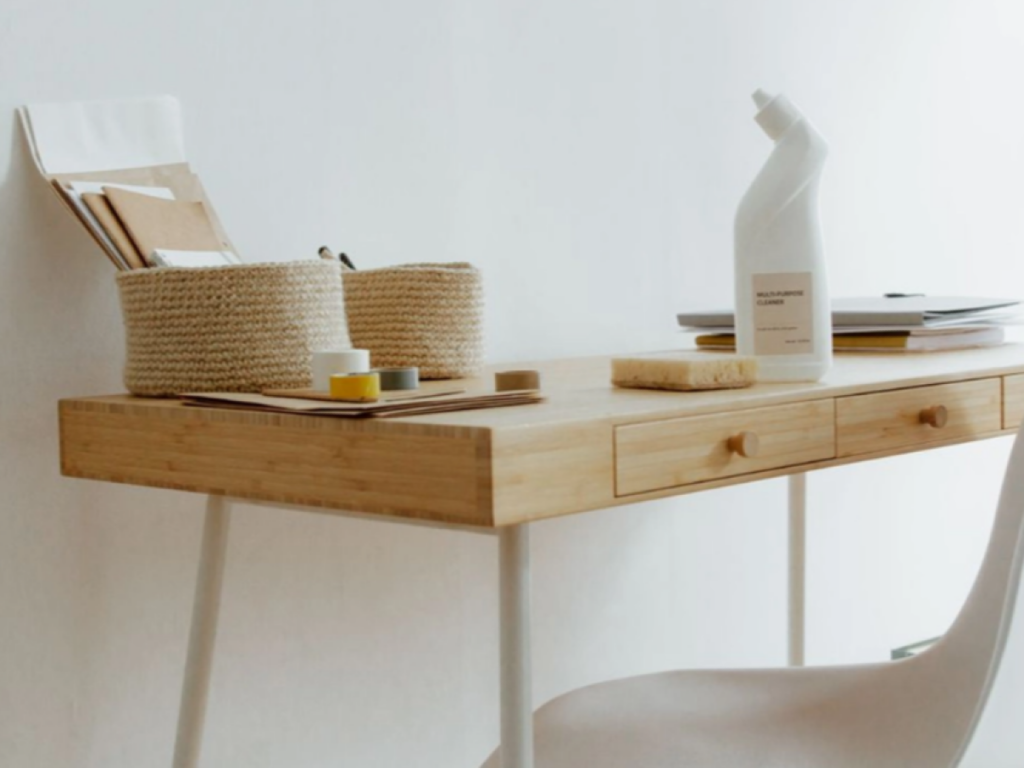
The effectiveness of the rule lies in how it forces decision-making. Instead of letting items accumulate passively, each object must be assigned a home.
“If it can’t stay there, we have to ask where it belongs,” says Cocchiaro. That simple question interrupts the habit of surface dumping and encourages more intentional storage habits.
Even imperfect execution helps. Items might get temporarily relocated into drawers or baskets, but the visual relief is immediate. “Your brain feels calmer when surfaces are empty,” says Orr, who notes that reducing countertop noise can significantly lower feelings of overwhelm.
Limitations of the Rule
Despite its simplicity, the one surface rule doesn’t solve clutter at its source. Without proper storage systems in place, items removed from counters often end up displaced rather than organized.
“If each item doesn’t have a proper home—whether a cabinet, garage, or trash—it will simply reappear somewhere else,” Cocchiaro explains. In that sense, the rule is a visual reset, not a complete organizing system.
Orr also points out that some spaces naturally require more flexibility. Desks, work areas, or multi-use surfaces can make it difficult to confine everything to a single zone. In such cases, strict minimalism may feel unrealistic. Still, she notes that reducing surface clutter usually improves how much you appreciate the items you do choose to keep out.
How to Apply It in Your Home
The strength of this method is how quickly it can be implemented. In most cases, it takes less time than a single episode of television.
Kitchen Counters
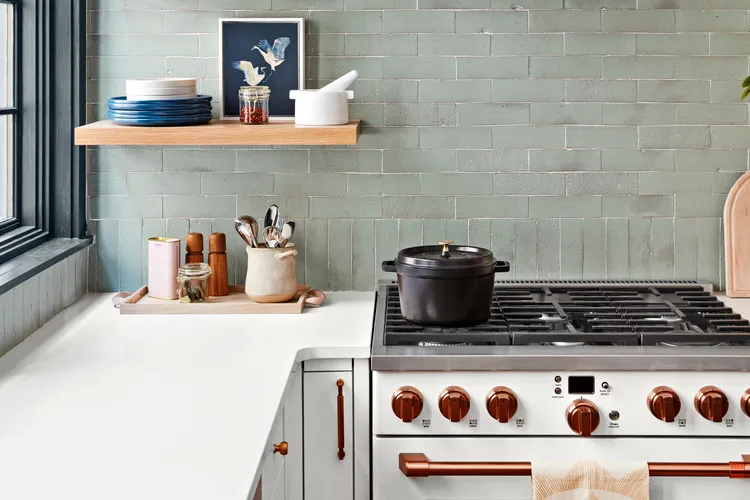
Start by assigning specific functions to specific areas. Orr suggests keeping only cooking essentials near the stove, such as oil, salt, pepper, and utensils. Everything else can be stored away to reduce visual overload.
Some households also benefit from creating a dedicated “coffee station” or prep zone. Keeping items grouped on a tray or small mat helps define boundaries and prevents scattered clutter from creeping back in.
Kitchen Islands
Kitchen islands are often the most difficult surfaces to maintain because they serve multiple roles. Cocchiaro suggests creating a nightly reset routine—especially in family households—where items like devices, books, and schoolwork are collected into a single container or cart.
By consolidating everything into one defined system, the island remains open and functional rather than becoming a permanent drop zone.
Entryways
Entry tables tend to collect daily essentials like mail, keys, and sunglasses. Orr recommends containing these items within a small tray, turning scattered objects into a single, organized unit.
This small shift reduces visual fragmentation and makes it easier to reset the space in seconds.
Nightstands
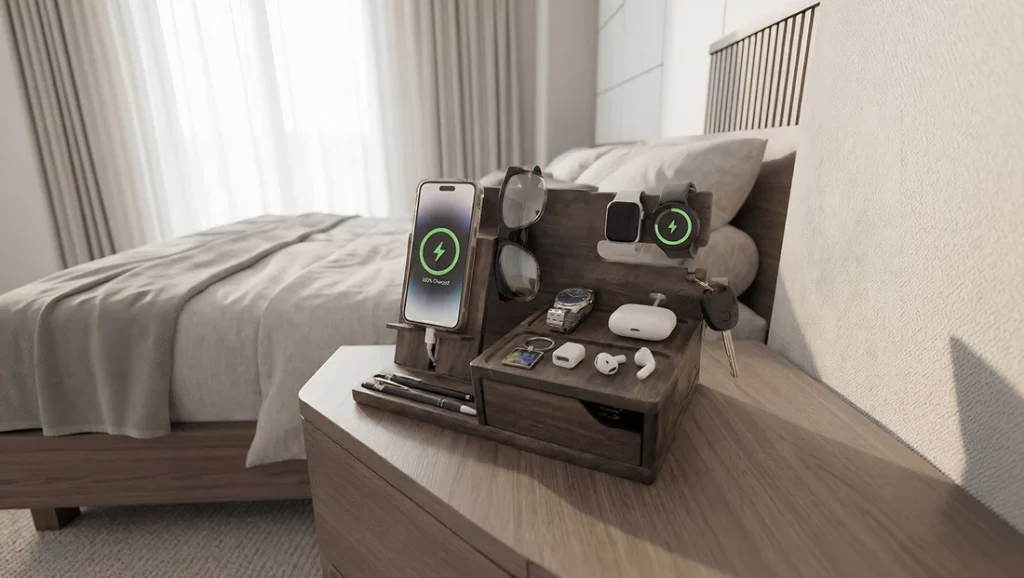
Nightstands work best when kept intentionally minimal. A lamp, a book, and perhaps one decorative item are usually enough. Some people may also include a charging station, but anything beyond essentials should be stored elsewhere.
The key is ensuring that everything on the surface has a purpose—and everything without one is relocated.
The Core Principles
Across all spaces, Orr emphasizes three guiding ideas: containment, function, and visual clarity. Items should be grouped, purposeful, and limited enough to maintain breathing room in the space.
Once a surface is cleared and reset, the difference is immediate—and often motivating enough to maintain the habit over time.
Sorry, the comment form is closed at this time.